
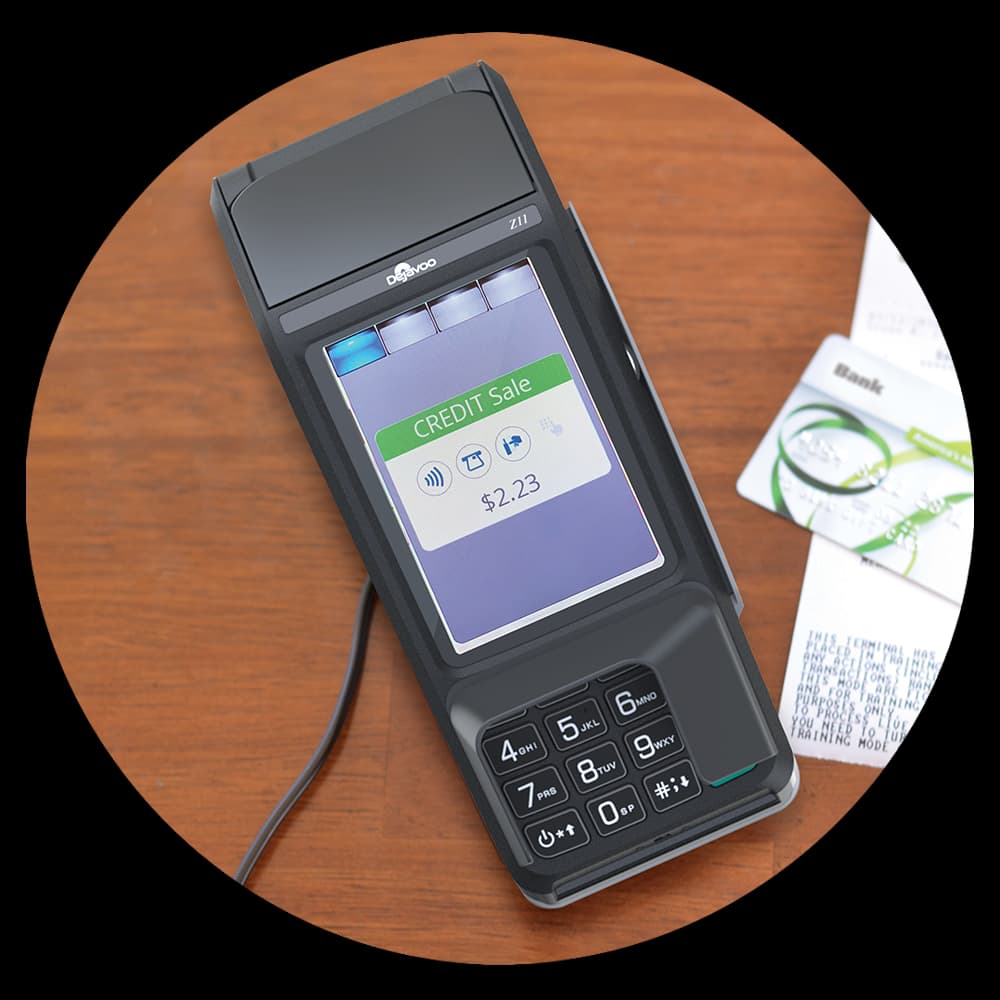
The Dejavoo Z11 is a Linux countertop terminal built for busy counters: a larger color display, a full physical keypad, EMV chip, contactless tap, and swipe, a built-in thermal printer, and your choice of Ethernet, Wi-Fi, or dial connectivity. This Dejavoo Z11 quick start walks you through the whole setup, from opening the box to settling your first batch, so the terminal is live and ready for customers today.
Before you begin, have three things ready: your network connection (an Ethernet cable or your Wi-Fi name and password), your merchant terminal ID (TID), and a roll of thermal receipt paper. With those on hand, work through the steps below in order and your Z11 will be up and running.
1Unbox and connect power
- Begin your Dejavoo Z11 quick start by unpacking the box and confirming the contents: the Z11 countertop terminal, the power adapter, an Ethernet cable, and a starter roll of thermal paper. The Z11 is a Linux countertop terminal with a larger color display and a full physical keypad, so inspect the screen and keys for any shipping damage before powering on.
- Set the terminal on a flat surface near a power outlet and your network jack. Plug the power adapter into the port on the back of the Z11, then into the wall. Press and hold the power key until the color display lights up and the Dejavoo logo appears. Let the device finish booting to the home screen before moving on.
2Connect Ethernet or Wi-Fi
- The Z11 supports wired Ethernet, Wi-Fi, and dial backup, so pick the connection that fits your counter. For the most stable setup, plug an Ethernet cable into the LAN port on the back and the terminal pulls a network address automatically — no configuration needed in most cases.
- To use Wi-Fi instead, open the settings menu from the home screen, choose the wireless option, select your network by name, and enter the password exactly (it is case-sensitive). Wait for the signal icon to confirm the Z11 is online. A working connection is the foundation of the whole Dejavoo Z11 setup, so confirm it before continuing.
3Load parameters and activate
- With the Z11 online, download its parameters — the settings that link the terminal to your merchant account and processor. Open the setup or download menu and start the parameter download. The terminal contacts the host, pulls your configuration, and reboots automatically.
- After it restarts, the Z11 is activated and ready to process live cards using EMV chip, contactless tap, and magnetic-stripe swipe. If the download stalls, verify your connection and your terminal ID (TID). Our Puerto Rico team can push parameters to your Z11 remotely if you get stuck here.
4Load receipt paper
- The Z11 has a built-in thermal printer, so load a paper roll before your first sale. Open the printer bay latch on top of the terminal and lift the cover. Drop the roll in so the paper feeds from the bottom of the roll toward you.
- Pull a short tail of paper past the cutter, then close the cover until it clicks. Thermal paper only prints on one side, so if a test feed comes out blank, flip the roll over and reseat it. Correct paper loading keeps this part of the Dejavoo Z11 setup quick and mess-free.
5Configure receipts and tip prompts
- Tailor the Z11 to your business. In the receipt settings, add your business name, address, and phone number to the header, and choose whether customers get a printed copy, an emailed copy, or both. The larger color display makes it easy to preview these options as you set them.
- If you accept tips — common for restaurants, bars, and salons — enable the tip prompt and set suggested percentages such as 15%, 18%, and 20%. Turn on tip adjustment so staff can add gratuity after the sale. These settings shape the Z11 around how you actually ring up customers.
6Run a test transaction
- Before your first customer, run a small test sale to confirm everything works end to end. Ring up a low amount on the keypad, then insert a chip card, tap a contactless card or phone, and swipe a card to verify all three read methods work on the Z11.
- Void or refund the test immediately so it does not settle. Confirm the receipt prints cleanly from the built-in printer and that the totals and any tip appear correctly. A clean test transaction is the final checkpoint that your Dejavoo Z11 setup is complete.
7Reprint a receipt
- Customers often ask for a duplicate receipt after a sale. From the home screen, open the receipt or reprint menu and choose to reprint the last transaction, or search by transaction number to reprint an earlier one.
- The Z11 pulls the record from the current open batch and prints a fresh copy. This is handy for expense reports and returns, and it saves you from re-ringing a sale just to hand over paper.
8Settle and close your batch
- At the end of each business day, settle your batch so the day's transactions are funded. From the home screen, open the settlement or batch menu and choose to close the batch. The Z11 totals the sales, sends them to the processor, and prints a settlement report.
- Review that report against your own totals before filing it. Settling daily keeps your deposits on schedule and prevents transactions from rolling into the next day, which is the last routine step of the Dejavoo Z11 setup you will repeat every day.
9Troubleshooting common issues
- If the Z11 will not connect, reseat the Ethernet cable or re-enter the Wi-Fi password, watching for a wrong character. If a parameter download fails, confirm the TID and retry on a stronger signal. Declined test cards usually mean activation did not finish — re-run the parameter download.
- For printing problems, reopen the paper bay and flip the roll so it feeds from the bottom. If a transaction hangs, reboot the terminal with the power key. If anything still looks off, reach out — local support means you talk to a real person who knows Puerto Rico merchants, not an overseas queue.
Want the full specs and pricing before you set up? See the Dejavoo Z11 page, or browse every Dejavoo support and manuals guide to find the right resource for your Puerto Rico business.